Published May 22, 2026

We’ll dedicate one sentence to the post-18 cliff: You can read up more about it with a quick Google or AI search, it is well documented and everyone talks about it.
We’re here to share about the terrain below — one that the system may not have fully mapped out, but that many navigate everyday. We want to talk honestly about what we actually see.
What the system offers PWDs, and where it stops
“You cannot go to school already…” is what every caregiver will need to one day tell their child with disabilities. Saying it is one thing; helping them to understand why is a whole different battle.
How do caregivers explain that they are “graduated”, an ambiguous concept that is supposed to signify you have learnt all you can from an institution and are ready to spread your wings? Are they truly ready to go out on their own to face the challenges of the real world? Are we?
There are established pathways: Sheltered workshops, day activity centres, employment programmes… and for the top percentiles, open employment. These are the options we have been working within. But it is also within these pathways that we have learnt, slowly and honestly that the goal of open employment is not the right destination for everyone. And that's not a failure - it's just reality, acknowledged clearly.
Most, if not all, of the learners who come to us come hoping for a job - a quick placement. They have cycled through the many pathways and are now desperate. The majority — around 70% — won't enter open employment by the end of their time with us. This is not because they aren’t capable, ready or haven’t worked hard; not because we haven’t tried either - but because what an employer needs and where someone is currently ready to offer themselves is, almost every time, not a match.
However, it's worth considering the possibility that the match isn’t the only available end goal.
This matters because if we only measure success by job placement, we miss most of the story.
If you don't progress, you regress.
That’s what we have watched happen too many times. We’re not exaggerating.
After a programme, when the structure of class halts, the muscles of learning, socialising, trying, growing, stop being used.
People generally don’t remain static - they go backwards. Skills so painstakingly learnt across months start to fade. Confidence, something that is never easy to build, quietly erodes.
That’s why what happens in class matters as much as what happens after. And sometimes, what happens outside of class is quietly extraordinary.
Introducing Rachelle:
Rachelle joined our programme with a physical disability and requires full support from Angel, her dedicated helper. Rachelle’s learned that she dreams of being a vlogger - showing the world life from her perspective… especially when she finally gets to go to Disneyland.
In the meantime, she wants to explore her interest in graphic design.
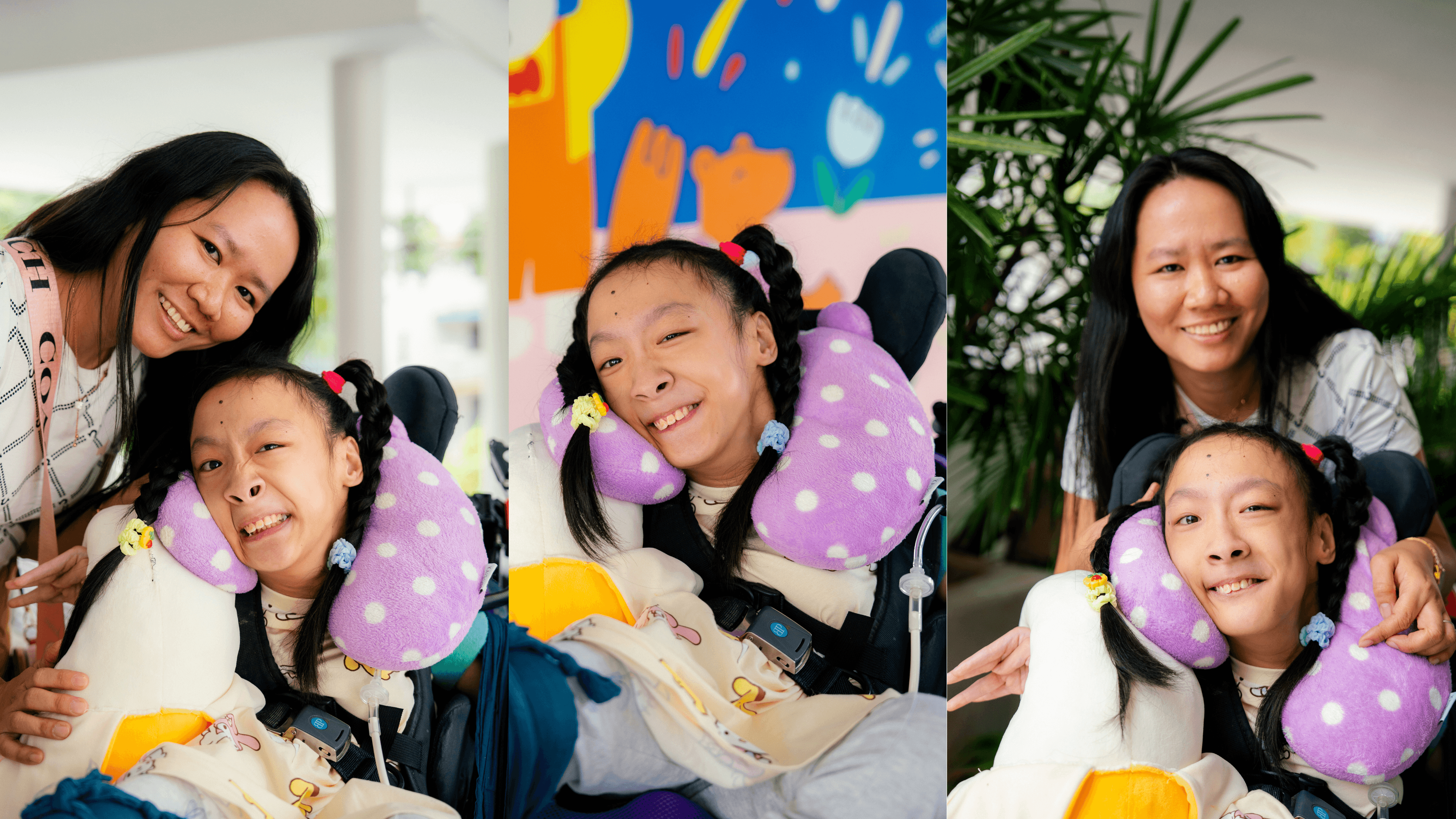
She's been practising that skill with Canva — designing cards, learning layout, experimenting with colour. Through the course, we could see her creativity flourish. Then post-programme, she made a Mother's Day card that made her trainer pause.
What struck us wasn't just the output - it was the shift in how Rachelle talked about what she was doing. She stopped framing it as something she was interested to learn, and started talking about it as a skill. That reframing from hobby to capability, from something I enjoy to something I'm developing, is not small. That is the beginning of someone seeing more in themselves than they had previously known.
She now aims to put her designs on real products that customers can buy. This is not a simulation of work, but work itself — at whatever pace and scope that she decides fit her.
Our place in this? We are trying to support her in her work. Using any expertise we may have, from marketing to system building, we hope to support her achieve her goals.
That's what progress looks like. It doesn't always look like a job offer.
The many shapes of meaningful
Now, meet Anirudh:
Anirudh came to us through the high support needs stream. He has an intellectual disability, and honestly, the goal was never a corporate desk. What we tried to build toward was something harder to define and more important than a job title: meaningful livelihood.
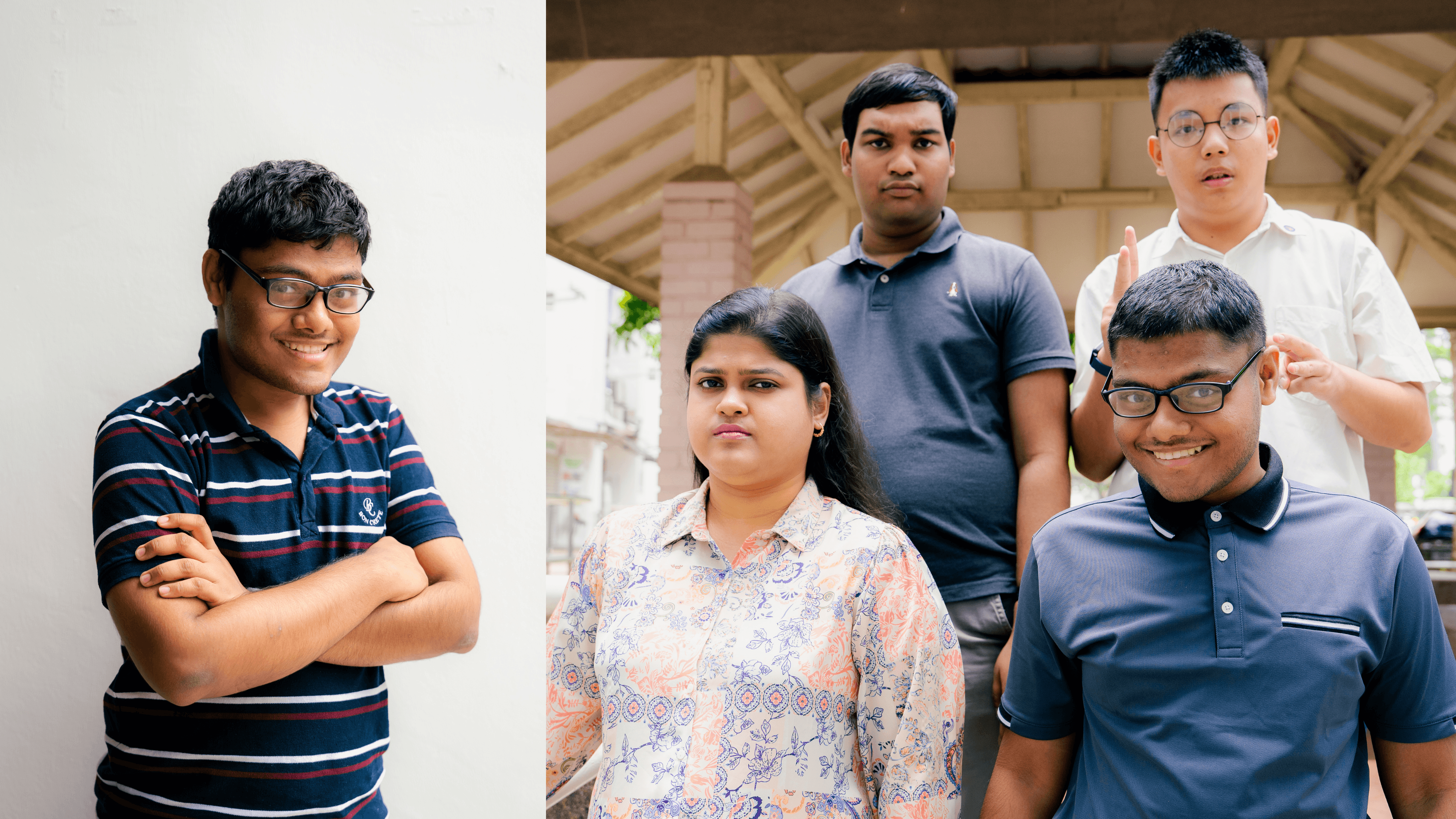
Anirudh found meaning in being genuinely present in a task that actually requires something of him. A workflow that needed him to not just function, but to be complete. That’s not something a training programme can replicate.
Working in a bakery may not mean he is financially self-sufficient, and realistically for most PWDs with high support needs, that ceiling of self-sufficiency exists. We acknowledge and accept that. Yet he contributes, he shows up and he is seen not as a beneficiary but as a member of a team.
Not just a “job”. That is, to us, a livelihood.
When employment paths aren't the way
Finally, meet Andrea:
Andrea is sharp, ambitious, and motivated - and she also has autism. She has been on the open employment pathway all on her own before. But the social demands, the sensory environment, and the implicit expectations that so many of us neurotypicals take for granted made her feel like she was a poor fit for employment. She came to us with low confidence in her abilities.
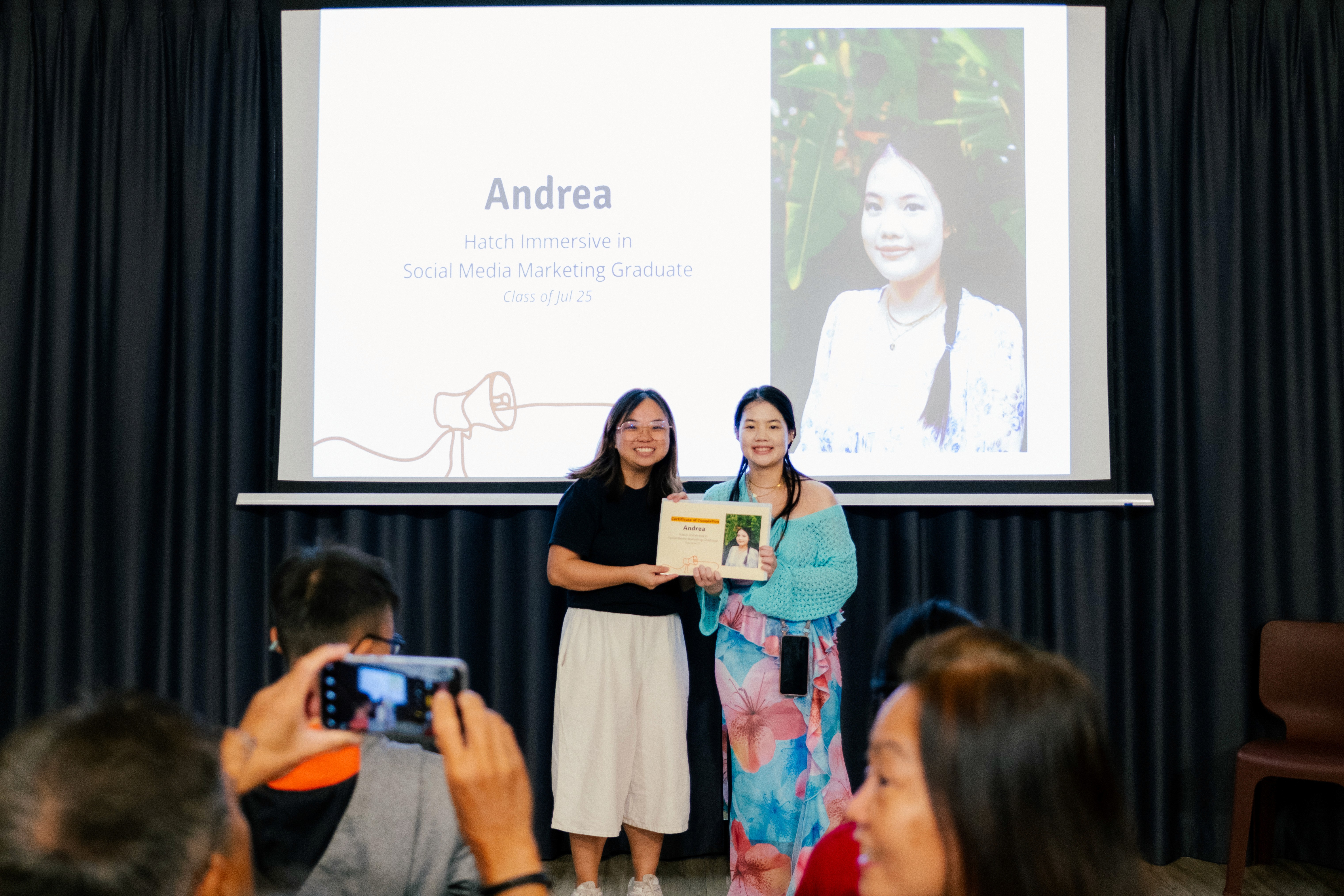
What if the path isn't employment, but enterprise?
Andrea has the instincts of an entrepreneur. Her interest in online shops, fashion and design came together during her time with us, and at the end of it she decided she wanted to start her own business. Without prompting, she came up with her business idea. With a little prompting, she built a brand, did market research, and started thinking about how to reach customers. This isn't a “side effect”. It's a legitimate pathway — one that requires ambition, motivation, and creativity. She has all three.
Andrea taught us how to support informally and honestly. We prompt where we can, with ideation, with the early scaffolding of a business idea - all while being aware about what we can and cannot sustain. For this pathway to work, certain conditions often need to be in place: a family that can provide financial backing, low support needs that allow for independent work, and real talent that has found its medium. When those factors align, we choose not to hold someone back from a path just because it isn't the conventional one.
The system tends to see employment as the destination. But for some people, it was never quite the right destination. Recognising that earlier, rather than later, is a kindness.
The question behind the question
The work of building a livelihood for a PWD is also the work of building alternatives. Routes that expand what's possible before circumstances narrow the options. Many - if not all - PWDs rely on their caregiver in one form or another. But one day, their caregivers will pass away, and the primary structure that holds their lives together will eventually disappear.
What then?
This is the question that employment, in isolation, doesn't answer. The learners who come through our programmes aren't just building skills. They're exploring the full range of what they can possibly become, because the earlier they discover what they're capable of, the more runway there is to build toward it.
Some of them will get jobs. Some will contribute in sheltered settings. Some will start something of their own. Some will develop a skill so specific and so good that someone, somewhere, will find a way to pay for it.
We don't always know which path it will be. And we have also been told that we don’t have to cover everything, and to trust in the systems put in place. But what we do know is that the exploration itself is the point: The worst outcome isn't failing to land a job - it's never having had the chance to discover what was possible.
What we're here to do
We work in the uncharted space between school and whatever comes next. We ask the question of what more is possible? Not as a motivational slogan, but as a practical, daily, sometimes frustrating, often moving commitment. We work with livelihoods.
We see the learner who thinks she's just making a card, and knows she's learning a skill. We see the young man in the bakery who is contributing to something real, who is needed and valued, not just given a token. We see the woman building a brand because a conventional job was never quite the right fit, finding her own courage and confidence in the process. And we see the families wondering what happens when they're no longer around to hold things together.
These aren't edge cases in our work. They are the core of it.
The post-18 cliff is real. But it doesn’t have to be a free fall. Instead, they mean finding a different path down. It might be slower, more winding, less obvious. But we will discover along the way that the landscape below is larger than it first appeared.
We're here to help people find that rainbow. However long it takes.
Zenas and Jun Hong are Academy Managers at Hatch and helm inclusive training programmes for PWDs. Beyond Hatch, Zenas pursues his love of film as a freelance photographer and videographer, while Jun Hong supports the Purple Symphony as its artistic coordinator.

“See the person first”: Meet Jun Hong and Zenas (the men behind programmes for PWDs at Hatch)
Get to know Jun Hong and Zenas - the duo who helm our vocational trainings for PWDs and serve our community of learners as job coaches - and the strong opinions they hold beyond their bios.
Team
Impact
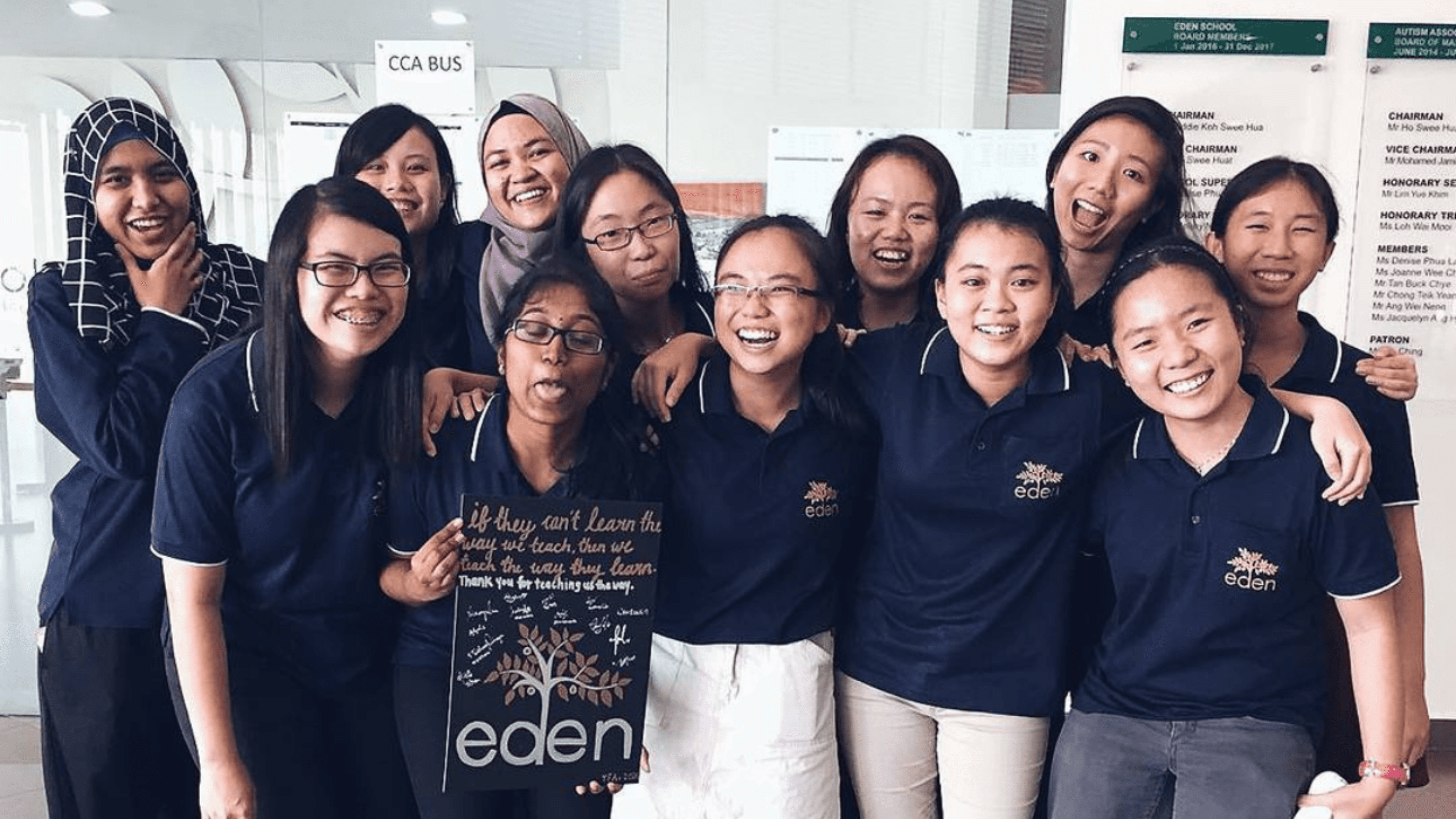
Re-imagining Livelihoods: The Hatch Origin story
How my internship teaching children with autism informed my own career thesis, and inspired the ethos behind Hatch today.
Mission
Impact
