Published May 12, 2026

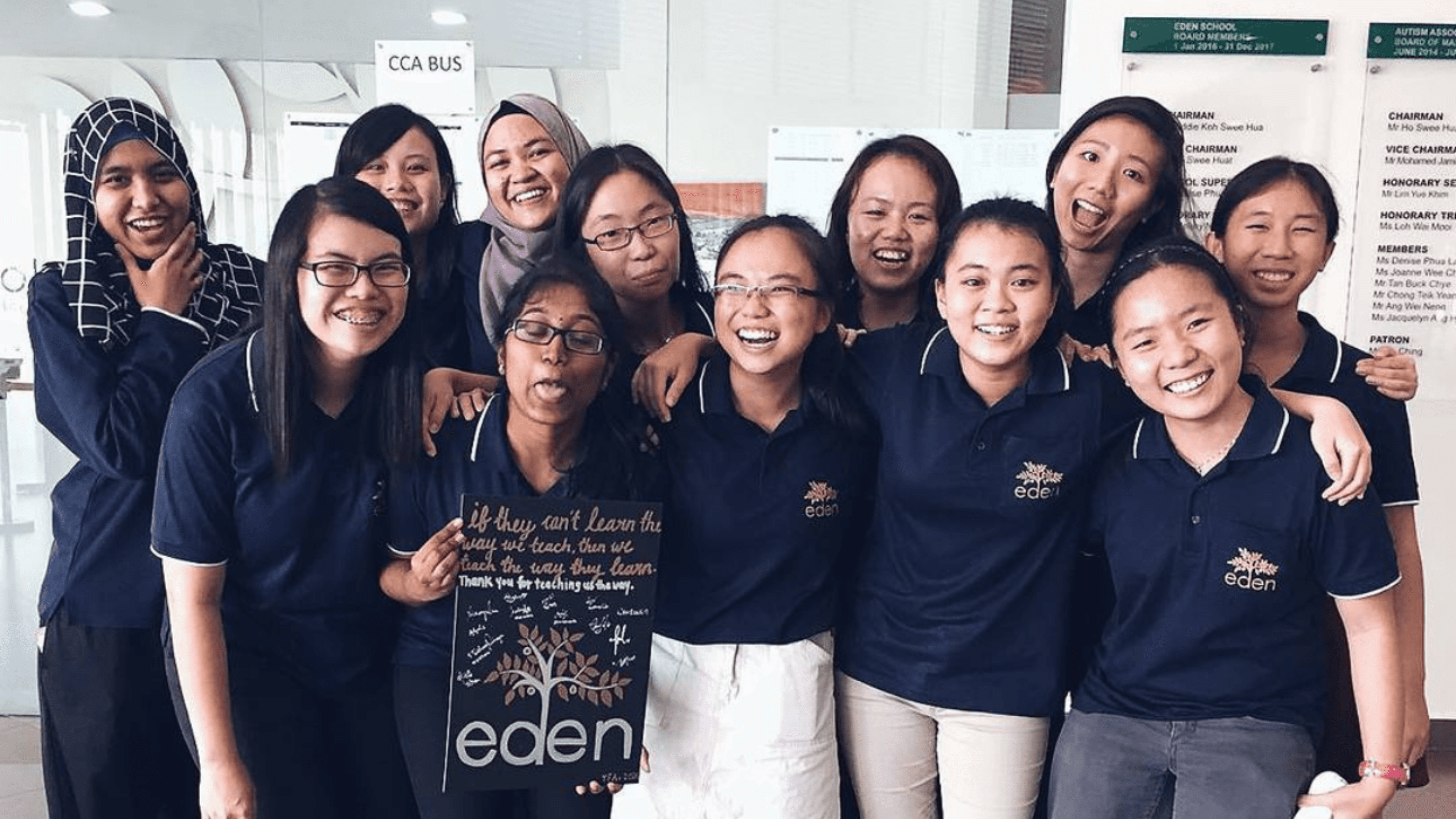
If we have met, I might have told you about my experience interning in Eden School.
I had just finished A Levels and was looking some work to occupy my time. I'd been volunteering with kids for a while by then, and I loved it, genuinely, unreservedly.
But somewhere in the back of my mind was a question I hadn't quite dared to ask myself directly: Does that love extend to all kids? Including children with special needs, whose needs looked different, whose progress moved differently, whose days didn't follow the scripts I was used to?
The Youth for Autism programme felt like a way to find out. I'd seen a couple of seniors from my school go through it and thought it was worth a shot. It was my first time writing a resume (which was basically blank) and a personal statement. A quiet “Let’s try and see how it goes”.
So I applied. And then I showed up to the interview in my school uniform.
The interviewer looked at me and asked, almost gently: did you come from school, or do you need to go to school after this? I told him the truth, because I didn't know what else to say: I genuinely didn't know what to wear. Cue smiley sweat drop face.
He laughed. I got the job.
It's a funny story, and I tell it often, usually to get a laugh. But I think about it differently now, sitting on the other side of the table, watching young people walk in for interviews at Hatch. Nobody had walked me through it. No one sat me down and said: here is how you show up, here is what to wear, here is how you signal that you are ready.
I just arrived, uniformed and earnest, and hoped that would be enough.
The fact that it was enough matters. But the fact that it was left entirely to chance matters more.
Eden School's motto is where potential is maximised. I didn't fully absorb it at seventeen. But it settled into me quietly, and how it became a big part of shaping my career thesis.
My first full-time role started at 7.30am. I woke up everyday at 5.45am to take the bus at 6.45am.
I remember the specific weight of those early mornings: the city still dark, the particular tiredness of someone who hasn't yet built the stamina for a full working day. I went home after work and slept immediately. At 8.30pm! That was my life for a while: wake up, bus, work, home, sleep. I felt I was already working for years.
But one thing that sat with me - it wasn't the hours that were hard. It was the emotional adjustment.
Working with children with autism, especially early on, before you've found your footing, involves a kind of helplessness I hadn't anticipated.
You come in wanting to help, and then you encounter the reality of it: that progress is slow, that some days nothing shifts visibly, that the gap between your good intentions and actual impact can feel very wide.
I found myself just stumbling and fumbling with words in class, unsure what is the best step that I should take. Am I teaching wrong norms if I acted like myself? How do I break down the steps of daily interactions to best teach these students.
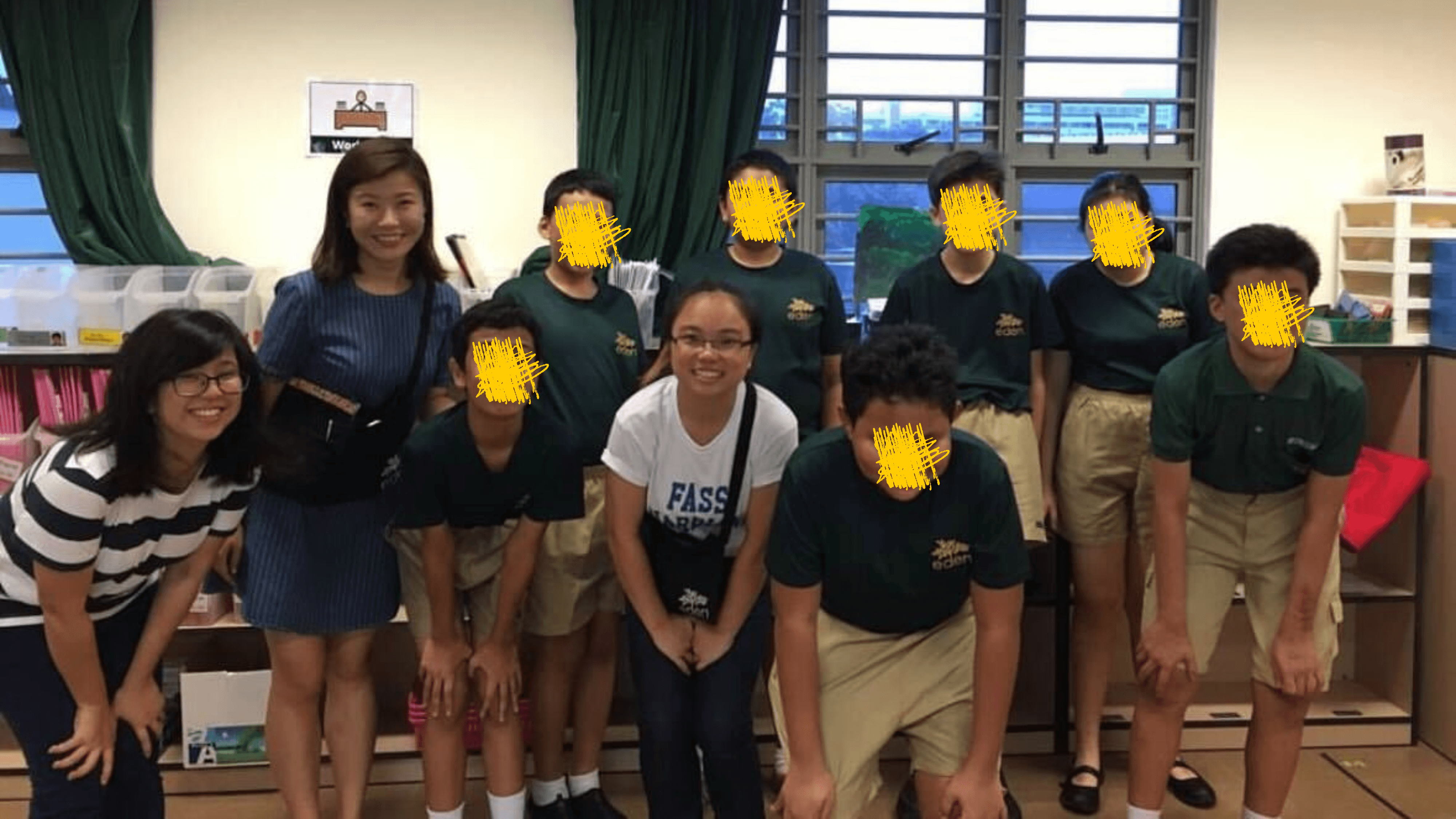
It felt like a really huge thing, to somehow feel like my presence was going to shape their lives. But I felt so much joy in those months. And these larger arcs that stayed with me.
One of them was taking my first class as a co-form teacher. Alongside my dream of being a baker, and here it was, unexpectedly, in a classroom I hadn't imagined, with students who taught me as much as I taught them. I remember thinking: oh. This is what I meant.
The other is harder to explain. At some point during my time at Eden, a photo ended up as my phone wallpaper: me and one of the students I was attached to. It stayed there for a long time, longer than I could justify rationally. Every time I unlocked my phone, there it was. A reminder of something I couldn't fully articulate yet, but didn't want to lose.
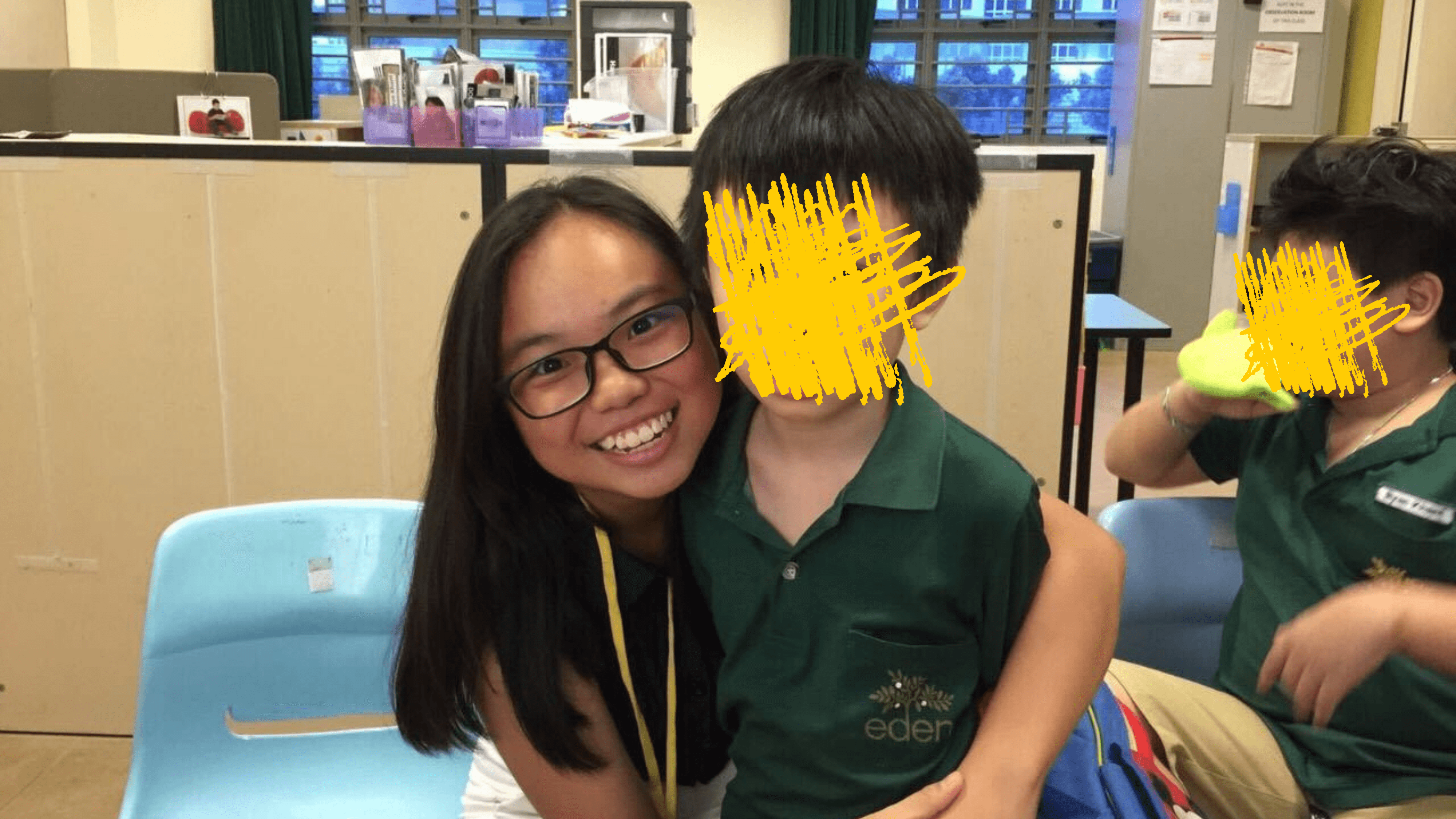
In Chinese, there is a phrase: 回到初心. Return to your original heart. The intention you started with, before the noise accumulated, before you got busy, before you started optimising for things that weren't the point. That photo was my 初心. It still is, in some ways.
I have a career thesis that I've been refining ever since, though I wouldn't have called it that at the time.
Every system, whether it's a school, a training programme, an employer, a grant framework, has bounds. A range within which it typically operates, outcomes it tends to produce, people it tends to serve.
And I think those bounds are almost always wider than we assume.
There is almost always more room than we've been led to believe: more human potential to unlock, more resources to stretch further, more good outcomes possible if we're willing to push at the edges of what we think is achievable.
This isn't optimism for its own sake. It's a practical conviction, one I've tested enough times to trust: that the ceiling is usually higher than where we've stopped, and that someone has to be willing to ask what happens if we keep going.
At the heart of it is person-centricity. Not programmes designed for an average case and applied uniformly, but systems that start with the individual and ask: what does this specific person need, and how do we build outward from there? It requires more. It's messier. But it's the only way I know how to actually maximise anything: human potential, resources, outcomes.
I believe, genuinely and wholeheartedly, that a better world is possible. And that we can build it together, not by waiting for perfect conditions, but by working with what we have and pushing it further than it's been pushed before.
When Hatch started building our PWD portfolio, it felt like coming full circle.
The question I'd been quietly sitting with at seventeen, on the 6.45am bus, in all the small and unheroic moments of that first job, had become the question we were now trying to answer at an organisational level: what does it actually look like to build systems that maximise people, rather than sort them?
We started with the social media marketing track because we noticed something specific: small companies were requesting social media management help, but a lot of the content they needed followed repeatable patterns, things that could be templatised, systematised, taught. There was a real gap between what employers needed and what they thought was possible to outsource. And there was a population of PWD jobseekers with capabilities the market hadn't figured out how to see yet.
So we built toward both, not as a charity exercise, but as a genuine bet that the system had more room in it than anyone had tested.
That is, in the end, what Eden taught me. Not through a framework or a methodology. Through a school that put its motto above the door and meant it: where potential is maximised. Through children who exceeded what the world thought they could do, quietly, every day, when the conditions were right.
The conditions are rarely right by accident. Someone has to build them. And every time I need to remember why, I think about a classroom I didn't expect to love, a photo I kept on my phone longer than made sense, and the question I asked myself before I fully knew I was asking it.
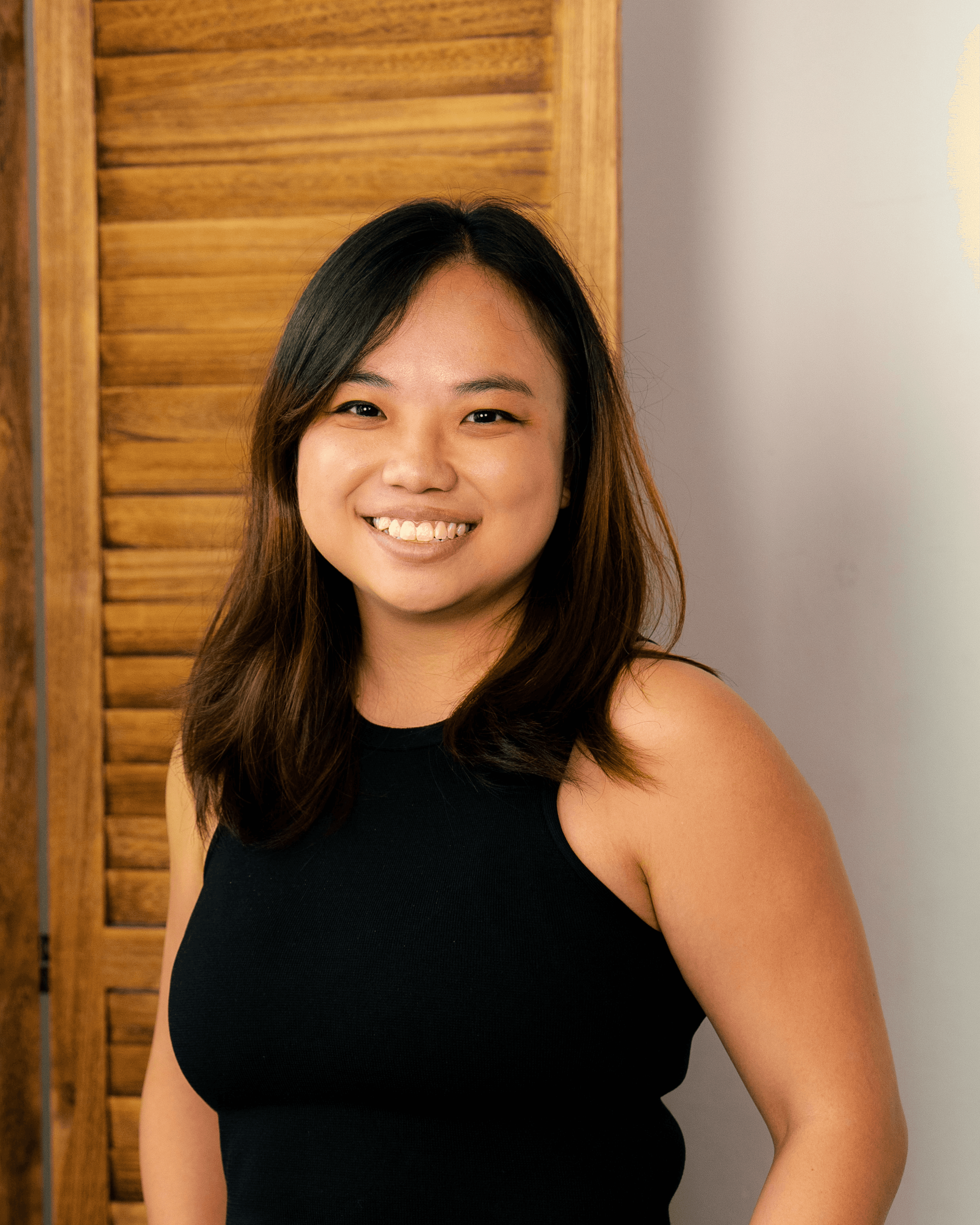
Wan Qing is the co-founder of Hatch and holds the title of Chief Hatch Officer, which means she is the self-appointed steward of Hatch's mission and its people's biggest hype woman — a job she takes very seriously. She also loves bread, and welcomes any and every opportunity to talk about her cats Fika and Kira.

“See the person first”: Meet Jun Hong and Zenas (the men behind programmes for PWDs at Hatch)
Get to know Jun Hong and Zenas - the duo who helm our vocational trainings for PWDs and serve our community of learners as job coaches - and the strong opinions they hold beyond their bios.
Team
Impact
Beyond the Cliff: The work of building alternatives
Routes that expand what's possible before circumstances narrow the options
Mission
Learners
Impact
