Published Jun 15, 2026


Nobody tells you what to do when the tool you distrust is the same one with a potential to level the playing field.
I am the first in my family to have studied abroad, to have navigated professional spaces without a map handed down to me. I am also someone whose values are rooted in social justice, in asking who pays the cost when the world moves forward. For most of my life, those two parts of me pointed in the same direction. Then AI arrived and they stopped agreeing, since the tool that could have shortened my own struggles is built on a system that prolongs someone else's.
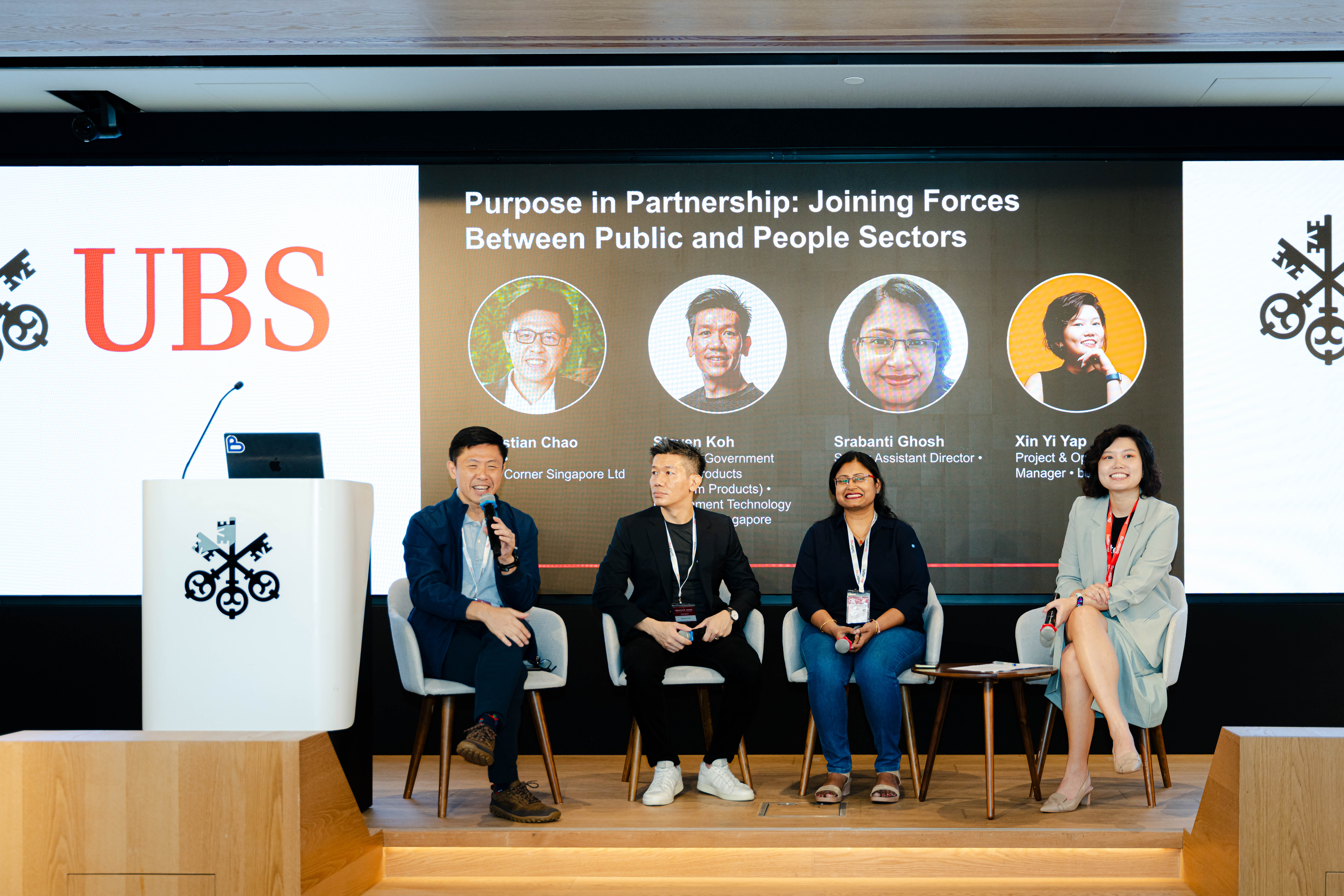
My introduction to AI was somewhat incidental. When I returned to Singapore November of 2024, I took on the role of Projects & Operations Manager for a tech non-profit dedicated to bridging the technology gap within social impact organizations (non-profit, charities, and social enterprises). With AI on the rise, it became an inevitable part of my role. I moderated discussions on it, built programmes around helping people use it, and spoke in rooms about responsible use — often as the conscience in the conversation. I got to witness how AI can be a tool that enables people to focus on impactful work, leaving the administrative tasks to an automated agent.
With my horizons expanded, my attitude towards AI changed as well. As the first in my family to have gone overseas for my university studies and then to secure a job by expanding on my network, I had to figure a lot of things out. Things that would otherwise be common sense to someone in a family with connections and know-how, like how to handle watercooler chats, how to network in a way that is true to ourselves, or even that one can (and should!) negotiate before accepting a job offer. Sometimes I have a mentor who would give me candid advice but most times, I learned lessons the hard way. In this way, I can see the potential of AI being a great equalizer. The next generation of first-gens - or anybody with an area of disadvantage - can tap into the machine and receive useful knowledge that they otherwise would rely on people’s availability and generosity for. That was also why I continued in AI, being Hatch’s AI Partnerships & Programmes Manager to bring their funded AI programmes to people who are looking to cut through the noise and learn about the tech.
It is also from this same desire for social justice that I am bothered by the implication of such a technology. You may have heard of two of these negative impacts:
Water Use. While the water use for a single prompt is dependent on factors such as the length and complexity, the impact of AI data centres are already felt in rural communities where the data centres are being built on top of noise pollution and rising electricity costs. Communities that had no say in where these centres were built are now living with the consequences.
Displacement. Google has set its eyes on 200 acres of land in Andhra Pradesh, India, where it would like to build its largest data centre outside of the United States. This data centre, if built, will be done at the expense of Dalit farmers, a community that’s amongst India’s most vulnerable. Years - sometimes, generations - of sowing the land, only to now be told they might lose it all after just beginning to reap the fruits of their labour.
Witnessing the harm that AI has already brought, I can’t help but wonder: Are we simply trading one oppression for another with AI?
Are we setting ourselves up for another lazy binary - lift some communities up with a powerful tool that fetches the information and strings it in a useful manner at the expense of others’ human right to drinking water and livelihood - rather than seeking a sustainable solution that lifts all who have been handed a disadvantage at life?
Besides, AI doesn't automatically bring equity to the table even if it has the capability to. AI is not a pick-up-and-play tool that many people assume it to be; the tool still demands literacy, time, and confidence. Through the development and delivery of AI projects and learning programs, I have heard audibly the frustrated sighs of people who realize that while optimizing their productivity and building a website is indeed easier now with vibecoding and GenAI, it still requires their input, participation, and monitoring. It’s not necessarily “just ask and go” either; there is prompt engineering (efficient ways to ask the GenAI for what you need) and knowing what tool is best for your needs. In a market where there can be as many as 50 new AI tools launched into the market every week, people are overwhelmed by the variety of choices - and redundancy.
My relationship with AI remains open-ended as of this writing. As a writer about topics that can be particularly touchy, AI has been a gamechanger. A LinkedIn post used to take me over a week as I sought out the views of a few trusted friends, waiting for them to be available and then making edits. Now, I can confidently publish one within the same day I finish writing. The AI has been a good sounding board - if one is cautious. I am cognizant that it can behave somewhat sycophantically, telling you what you want to hear instead of an honest take. Through prompting techniques and discernment, I have been able to make AI work for me and help me achieve my goal of building my brand through content at a quicker pace. But I do not think that’s the majority’s experience.
The tension within me got loud enough that I put it publicly to my followers a few months ago, and the responses came. People had opinions - strong ones - but not about the question at hand of whether I should continue to be involved, but they too resonate with the need for a nuanced discussion about the proliferation of AI in our lives.
It is the same question I ask myself, and I am asking it now of my fellow Singaporeans: What are we trading as a nation in exchange for the convenience and efficiency that AI has promised?
The government has committed S$1 billion in public funding between 2025 and 2030, carving out space at One-North for researchers, industry, and government to work together on AI innovation. They called it Kampong AI — kampong, the word we invoke when we speak of community, of showing up for each other, of ingenuity born from human connection.
But a kampong was never built on a billion dollars nor technology. It was built on people choosing each other, taking care of each other, the kampong spirit at its core. And perhaps that is where I land — not on a verdict, but on a condition. AI has the potential to be the resource that the next first-gen, the next Dalit farmer's child, the next person handed a disadvantage at life, reaches for when no mentor is available and no map has been passed down. But that potential is only worth something if we build it without extracting the cost from the very communities we claim it will uplift.
So if we are looking at integrating AI into our culture and society, then we should be having honest discussions of where we draw the line. What are the ways we can honour and protect our kampong spirit with AI? I don't have the answer yet. But I think asking the question — honestly, repeatedly, uncomfortably — is where we start.

Xin Yi Yap is a Culture Conduit — a cross-cultural communication practitioner who has lived and worked across three countries, navigating professional spaces without a roadmap handed to her. A first-generation graduate whose career in the U.S. was recognised with multiple awards, she leverages her international experience to develop programs and narratives that foster deeper connections within global teams. By partnering with multinational organizations across sectors, she strives to ensure that others don't have to find their way to do so in isolation.