Published Aug 5, 2026


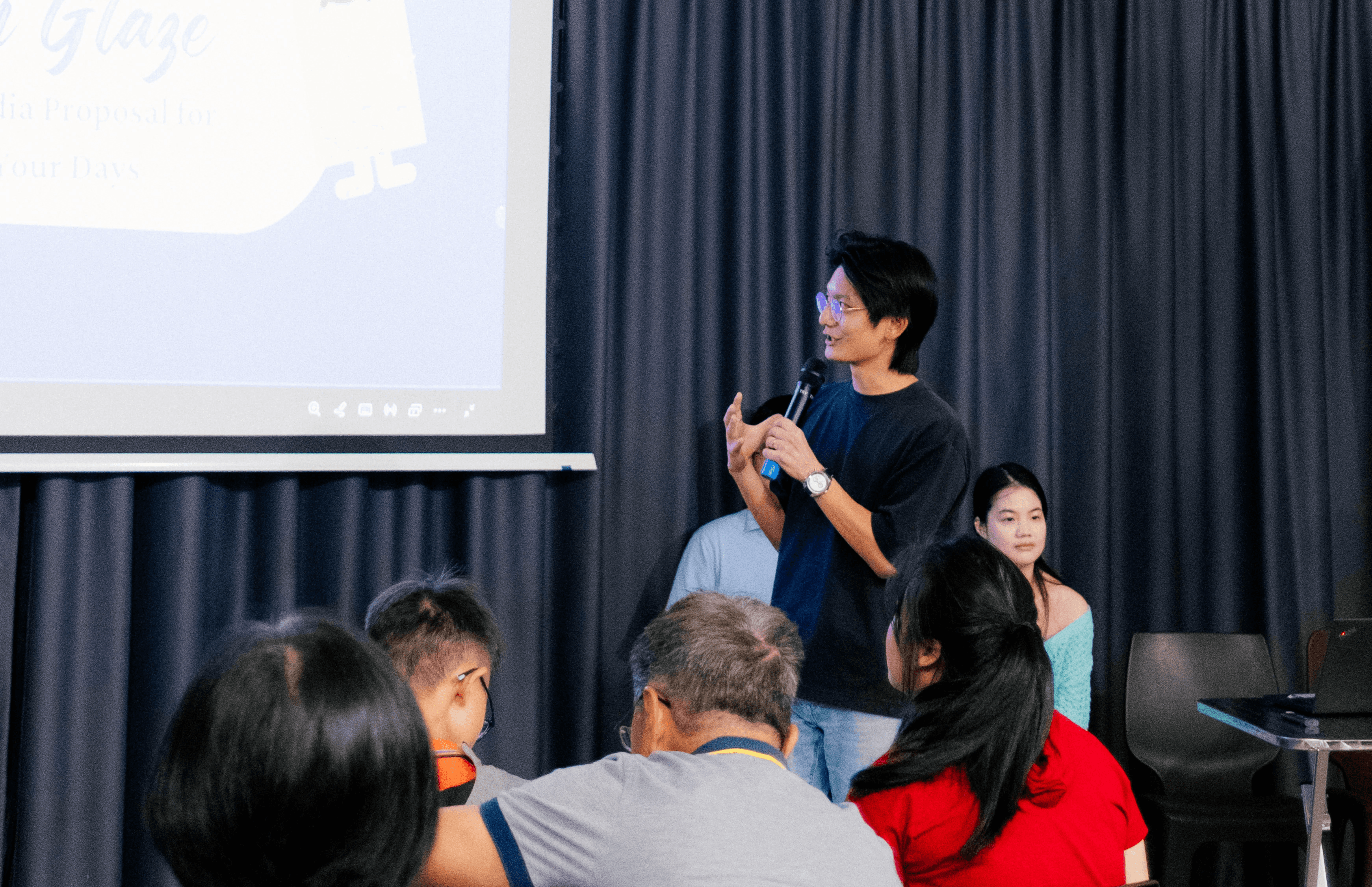
At Hatch we’ve been running programmes for PWDs for 3 years. Along the way, we’ve become equally passionate and opinionated about why and how we do this - and we thought an introduction to the individuals who helm our inclusive trainings was overdue. Get to know Jun Hong and Zenas - the duo who helm our vocational trainings for PWDs and serve our community of learners as job coaches - and the strong opinions they hold beyond their bios.
Introduce yourselves - who are you really, and what led you to do this work?
Jun Hong:
"I’m a person who always wants to do what other people aren’t doing, and I’m also a person who always wants to try things that other people think are impossible.
I see a gap in support for PWDs, and I think that if we approach the situation from a different lens, maybe we can open new doors, new possibilities for this group of people.
I believe that everyone should have access to opportunities. Regardless of whether they succeed, what we can do is try to facilitate this access, make sure it exists.
It all started when I was invited to perform as a guest with The Purple Symphony in 2017. Back then I knew nothing about PWDs, and the experience sparked my curiosity. And I thought, it’s challenging - but is it impossible?
The thought kept popping up, and I committed myself to this journey to explore, learn new things, and rethink certain perspectives. Even if everything I did wasn’t successful, at least the people who come after me will know about what didn’t work, and can try out new ideas that might work. We never know what those future opportunities might be. We can only do what we can now."
Zenas:
"I started paying more attention to the experiences of people with autism when I volunteered for a programme by one of my professors in school - her idea was that one way to engage kids with autism was to go into their world physically, by doing what they do. We would meet a few parents and kids and spend 1-2 hours together a week. It was really interesting - the kids were small, and we literally would go down to their level to copy what they were doing. And it actually worked in a sense - the kid would look at us. That’s actually quite a big step - for a child with autism to acknowledge your presence.
Then I graduated from university and my first job was working with PWDs as a job coach.
I realised then that I enjoyed working with them more than with neurotypical people because what you see is what you get.
Sometimes I find that communicating with them is more genuine - it is what it is; no hidden agendas.
I aspire to live my life with that kind of disregard."
What is it like working at the intersection of PWDs and employment?
Jun Hong:
"Work in this sector is hard - it takes a lot of courage and patience.
Much of this work centers around reframing and broadening perspectives. What seems like someone’s weakness can be turned into a strength if we place them in the right place.
Tough emotions do arise - I recognise and accept them. The factors that contribute to the current situation are not something I can change, and I shouldn’t make myself feel uncomfortable because of the things I cannot change. I should focus on what we can work on and how to make the situation favourable for everyone in the shortest about of time."
Zenas:
"I experience a lot of angst! We quite often feel stuck encountering roadblocks in the system - but these are unavoidable, something we have to work with, not against.
It’s the individual learners we meet who keep me going. When we go through a whole programme and get to know them, that relationship - you have to experience it in order to know why we continue doing this. You can’t put it into words."
Jun Hong:
"I hold a lot of angst too, and I will never forget that angst. It’s my fuel to challenge the system. When we bow down and accept things as they are, that’s where a lot of possibilities end."

What are some things you wish more people knew about the realities of hiring PWDs?
Zenas:
"There are a lot of nuances when it comes to job placements for PWDs that are often passed over. Every organisation has their own view of what works, what doesn’t, about the way things should be. These translate into sector policies depending on what organisations say and their standing in the disability sector and this affects how policies are rolled out.
Our perspective is that companies are willing to hire, but it’s more complicated than that: Are they really ready to receive PWDs? How long are they willing to receive PWDs? What does progression look like for them?"
Jun Hong:
"To be factual, hiring a PWD often requires job redesigning - if not done well this can increase costs and in this climate most employers want to avoid this. Job redesign is so important… reducing supervision, creating a culture that the employee can settle into and become as independent as possible. How willing are companies to work with job coaches, work designers, putting in the effort to get buy in from other staff in the company? All this plays a part.
Finding an answer with one company doesn’t translate to the whole ecosystem.
We don’t believe in broad stroke guidelines. What we’ve learned from our experience is that PWDs need varied support. How do we match the right employer with the right PWD? How can the PWD’s strengths and aspiration can flourish in the new workplace?
To us enabling our learners to flourish, find worth, find self-actualisation - that’s really important."
How do you think we can make progress between where we are now, and where we want to be in terms of realising sustainable employment or livelihoods for PWDs?
Jun Hong:
"Aspirations and employability are important. Now the market and ecosystem seem to prioritise employability way more than aspiration - I’m not comfortable with this.
If we can find a balance with aspiration, the motivation to stay in a job increases, someone can sustain a job longer, increase the job opportunities available to them. We need to sustain new jobs alongside creating more jobs.
Not all PWDs are able to communicate and advocate for themselves. We need to explore the possibility of involving them in job redesign, to find positions where they can contribute and enjoy their role.
I want to continue to shape perspectives. I’m hopeful about the next gen of business owners, enterprises, bosses. Some trauma has already been inflicted inadvertently on some PWDs in this generation, and we want to avoid this happening in the future.
At Hatch, we’re trying to pull different pieces of the puzzle together. If this works - great! But if this doesn’t work, at least we changed some perspectives."
Zenas:
"My wish is for everybody to take this personally. At Hatch one of our operating principles is to see the person first. If you don’t take things personally, a learner becomes just another number, another task to do, grant to secure. But they are individuals - not clients, not KPIs. Seeing them this way makes a lot of difference.
Giving PWDs autonomy and a sense of personhood is sometimes lacking in this sector. For example, if you want to convince them to take on a job - one way is to tell them it’s the only job they can do and that they need to think about money. Or, you could say - I’m laying out these options for you, this is what we have. You can give this a try. If you don’t want do this long term, maybe you can see it as a as a stepping stone to something else.
Everyone just wants to push things forward; sometimes the value of a person is negated in the process. If we approach every individual on a personal level that might change some of the things we do.
Doing things this way can be very draining - it takes so much effort on top of your daily tasks. You’re so invested, it’s easy to get burned out."
Do you have any advice for PWDs or caregivers considering enrolling in a new training or course?
Jun Hong:
"My advice for PWDs or caregivers exploring courses or trainings is this:
Don’t see learning a skill as just acquiring a skill. Every course is an opportunity for growth.
We’re helping learners understand how to be a better version of themselves in work, in terms of themselves. We can’t promise secure job placements, we can only promise the possibility of growth."
Zenas:
"Many times, learners come to our programmes drawn to the social media marketing aspect and expect to graduate with some social media marketing skills.
But we’ve found that those skills are not the biggest things they take away. Their bigger takeaways are the stamina to come for class, sit in class for 8 hours a day… it’s the flexibility they develop over the course, how they adapt to change and their other classmates. It’s learning to be independent, going for lunch by themselves, building a new community. All these small things snowball into something bigger in their personhood.
Even if at the end of the day they don’t secure a job in social media marketing job or find that they’re not a fit for it, the experience readies them and builds them for the next thing they want to try and pursue - whether it’s another course or work. We realise this is bigger than the skill itself."
Want to find out more about our vocational trainings for PWDs? Click through here, or shoot our team a message.
Beyond the Cliff: The work of building alternatives
Routes that expand what's possible before circumstances narrow the options
Mission
Learners
Impact
Re-imagining Livelihoods: The Hatch Origin story
How my internship teaching children with autism informed my own career thesis, and inspired the ethos behind Hatch today.
Mission
Impact
